Sunday, July 21, 2013

Crepe Myrtle, Crape Myrtle, Crapemyrtle

Spell it how you like! To the chagrin of many an editor, I’m sure, there is no hard and fast rule about how to spell the name of this most unusual and prolific tree of the South. I am going to choose the “crepe” option myself, because its colorful blossoms resemble that of “crepe” paper.

Originally from China and other Asian countries, the crepe myrtle thrives in the heat. It was brought to South Carolina by Andre Michaux, French/royal botanist to King Louis the XVI. (And if you’re interested in the topic, look up Andre Michaux’s biography; he led quite an interesting life at an interesting time in American history.)

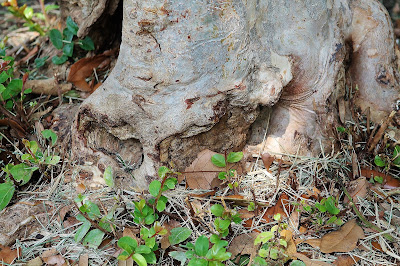
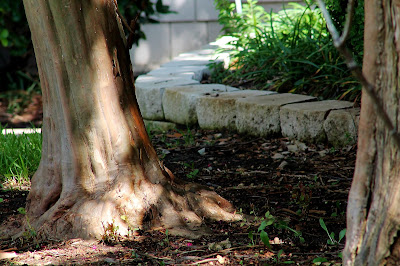
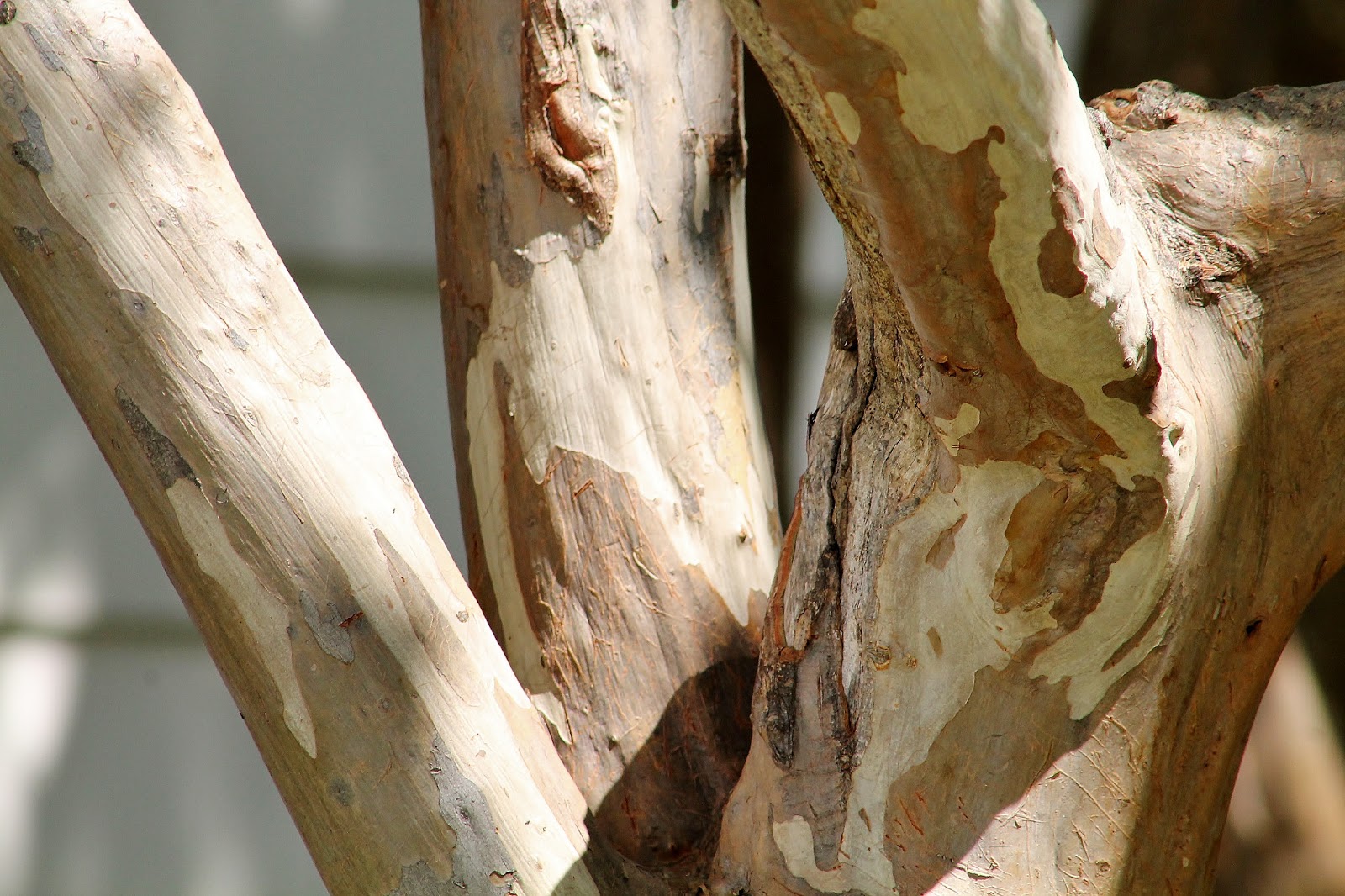
For me, coming to Texas from the canopy of New England trees was shocking because there are no trees to speak of here, at least not in the part of Texas I live. But this particular breed has struck a note with me and I can’t tear my eyes away from them. Though the vibrant colors of the blossoms are wonderful, the parts of this tree which engage me are the trunk and limbs.

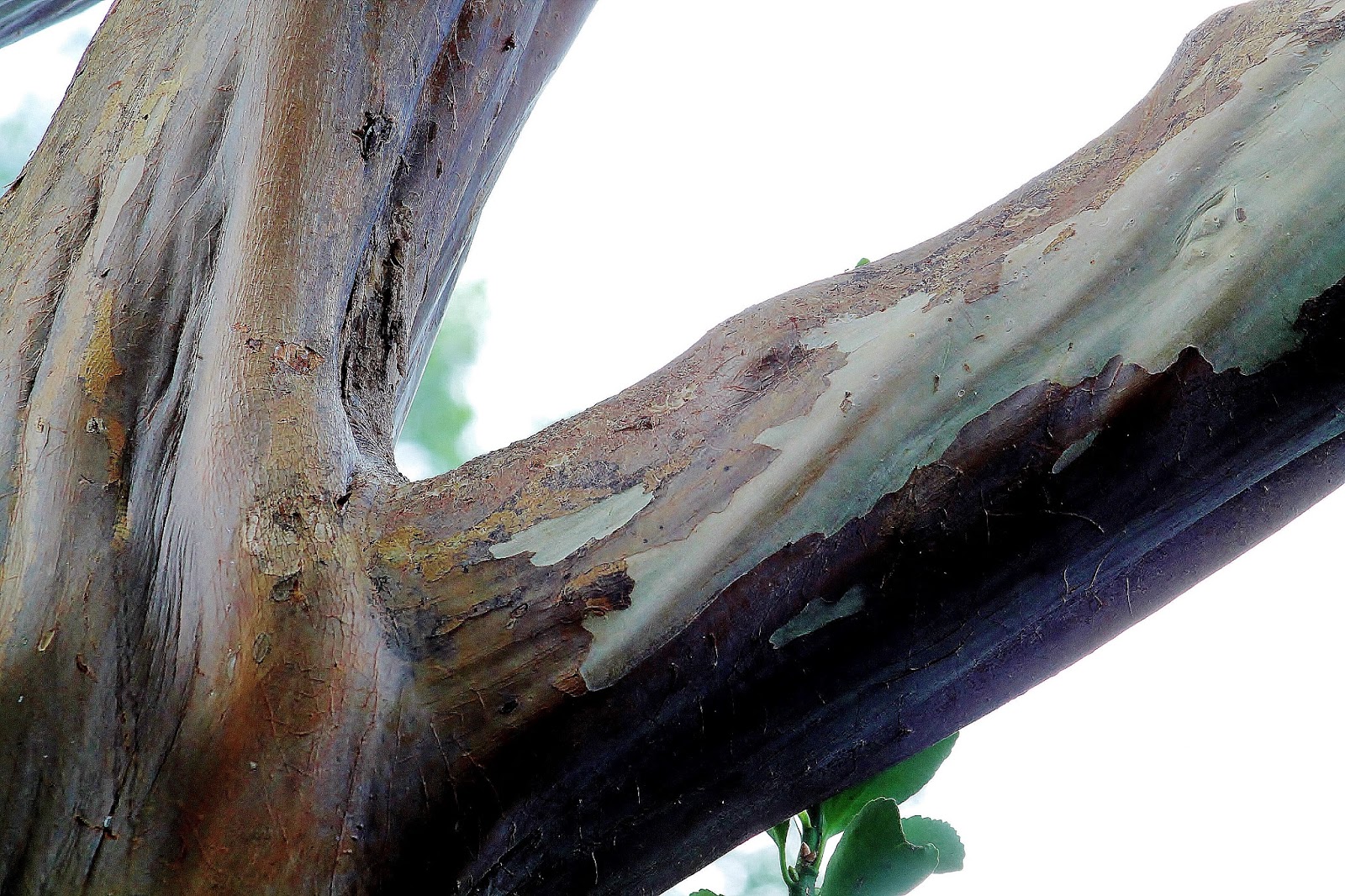
There is something very human about the body of this tree. It is muscled and smooth like flesh. It dimples and wrinkles and folds. It has elbows and joints, sinews and varied tones. Some trees appear as though they are sculpted in clay. Others, at the base, look like melted candle wax.

And then, like snakes, they shed their skin. And they drop their colors on the ground, making us to walk through leftover party favors.


Friday, July 12, 2013

Life of the City

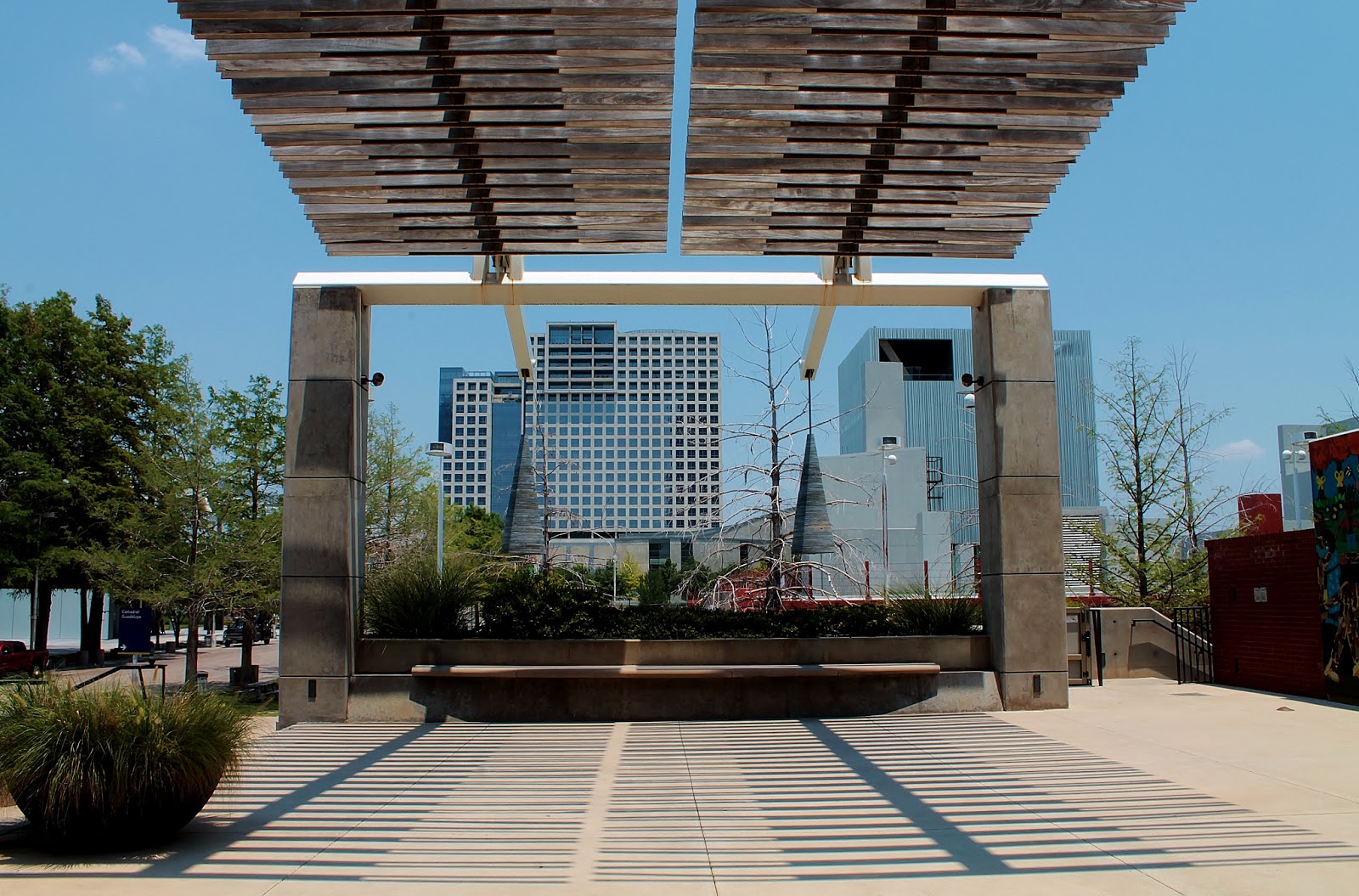
If people make a community, buildings make the city. People rarely change, but societies grow, and with it, technology and the things we build.

Architecture matters.

What do you look for in a community? Work, sure. You have to make a living; it would be great to work in a cool building (literally and figuratively – I’m writing this from Texas, HOT capital of the world). Restaurants. Bars. Churches. Entertainment. Arts. Culture. All of these needs and wants are built around the communities humans create, and voila! Architecture.

It’s fun to look at cities, to see how the old mixes with the new. How banners and flags go up on main streets giving them a circus-like feel. How lines, trees, curves and air all play together to create an “essence”. Some feel inspired, some feel playful, some are majestic and others are downright dirty.

Cities show the outward expression of humanity. They show us who we are.


Friday, July 5, 2013

Fine Art America

Hi everyone,

I want to let you know about a site that I am a part of. It is called Fine Art America where artists, buyers and galleries can go to view and buy art.

What is unique about the site compared to other sites I have used, is that you can look at a piece you're interested in different frames and mats before you buy it! It's very cool. Click on the site and click on a piece that you like. On the right-hand side you will see options for framing and matting and you can choose different colors and styles.

Thanks for looking!

http://fineartamerica.com/profiles/jennifer-sturch.html


Thursday, July 4, 2013

The Earth Laughs...

It's apropos that I should write this post on the 4th of July, the day America claims the birthday for the land of the free. The irony, of course, is that the land has always been free, it's people who entrap it, claim it as their own.

I know that this American nation and its founding documents relay an ideology, not the freedom of "the land" itself but of its people. But people are funny, we're the ones who not only build bridges, but also fences and walls.

No one says it better than Emerson. I'm sure you've heard the phrase, "The Earth laughs in flowers", but have you read the poem from which it comes? I am posting it here, because it is a wonderful reminder to us of how to really be free - we only need look to the land. It has wonderful things to teach us.

Hamatreya

By Ralph Waldo Emerson

Bulkeley, Hunt, Willard, Hosmer, Meriam, Flint,
Possessed the land which rendered to their toil
Hay, corn, roots, hemp, flax, apples, wool, and wood.
Each of these landlords walked amidst his farm,
Saying, “’Tis mine, my children’s and my name’s.
How sweet the west wind sounds in my own trees!
How graceful climb those shadows on my hill!
I fancy these pure waters and the flags
Know me, as does my dog: we sympathize;
And, I affirm, my actions smack of the soil.”

Where are these men? Asleep beneath their grounds:
And strangers, fond as they, their furrows plough.
Earth laughs in flowers, to see her boastful boys
Earth-proud, proud of the earth which is not theirs;
Who steer the plough, but cannot steer their feet
Clear of the grave.
They added ridge to valley, brook to pond,
And sighed for all that bounded their domain;
“This suits me for a pasture; that’s my park;
We must have clay, lime, gravel, granite-ledge,
And misty lowland, where to go for peat.
The land is well,—lies fairly to the south.
’Tis good, when you have crossed the sea and back,
To find the sitfast acres where you left them.”

Ah! the hot owner sees not Death, who adds
Him to his land, a lump of mould the more.
Hear what the Earth say:—

                EARTH-SONG
          “Mine and yours;
          Mine, not yours.
          Earth endures;
          Stars abide—
          Shine down in the old sea;
          Old are the shores;
          But where are old men?
          I who have seen much,
          Such have I never seen.

          “The lawyer’s deed
          Ran sure,
          In tail,
          To them and to their heirs
          Who shall succeed,
          Without fail,
          Forevermore.

          “Here is the land,
          Shaggy with wood,
          With its old valley,
          Mound and flood.
          But the heritors?—
          Fled like the flood's foam.
          The lawyer and the laws,
          And the kingdom,
          Clean swept herefrom.

          “They called me theirs,
          Who so controlled me;
          Yet every one
          Wished to stay, and is gone,
          How am I theirs,
          If they cannot hold me,
          But I hold them?”

When I heard the Earth-song
I was no longer brave;
My avarice cooled
Like lust in the chill of the grave.